
Uncategorised
Disable aids

Daves Holmes
A Complete Guide to Disability Aids & Home Lifts from DHG Services
Enhancing Mobility, Independence & Quality of Life Across the UK
Mobility challenges can change how you use your home—sometimes gradually, sometimes overnight after an illness, injury, or hospital stay. Stairs become risky. Split-levels feel like obstacles. Even simple daily routines (getting to the bathroom, bedroom, or front door) can start to depend on help from others.
The good news: modern disability aids and home lift technology can restore independence quickly, safely, and with far less disruption than most people expect.
DHG Services is one of the UK’s trusted providers of mobility and access solutions, helping homeowners, families, carers, landlords, and commercial clients install the right equipment to improve safety and accessibility. In this complete guide, you’ll learn:
- Which disability aids and home lift options exist (and who they’re best for)
- Typical UK costs and what affects pricing
- How installation works—from survey to handover
- Key legal and compliance considerations (Equality Act, Building Regs Part M, LOLER)
- How servicing and aftercare protect your investment long-term
If you’re trying to make the right decision for yourself or a loved one, this is the full roadmap.
What Are Disability Aids and Accessibility Solutions?
“Disability aids” is a broad term covering products that help people live more safely and independently. In the home-access world, the biggest categories include:
- Stairlifts (straight, curved, outdoor)
- Through-floor lifts (two-level vertical travel, often wheelchair-friendly)
- Platform lifts (vertical travel for wheelchairs, often in homes and public settings)
- Step lifts (short-rise lifts for a few steps or a small height change)
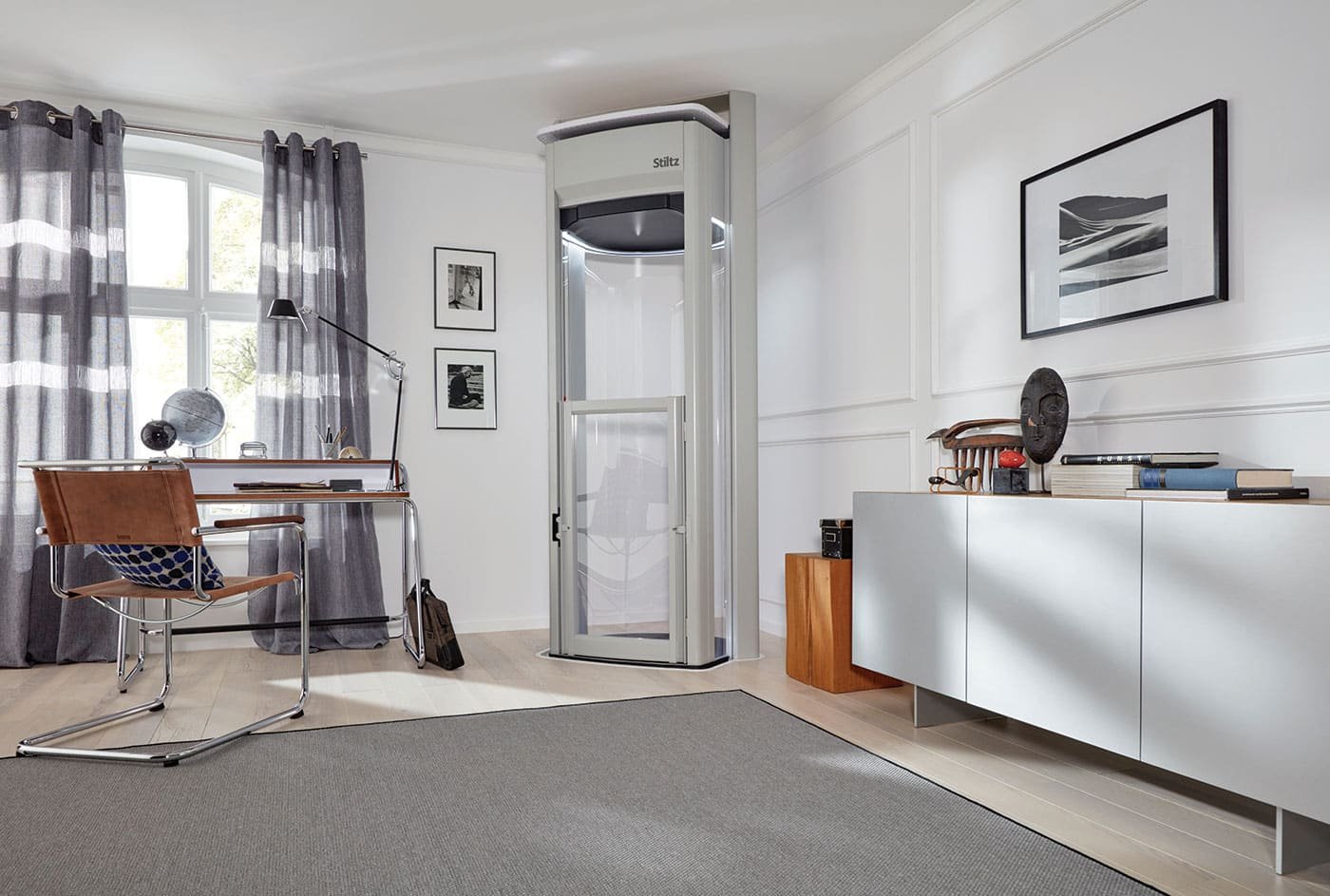
- Home lifts (compact domestic lift systems designed for comfort and future-proofing)
- Servicing, maintenance and statutory inspections (including LOLER where applicable)
A professional provider like DHG Services helps match the right solution to the building layout, user needs, and budget—without overcomplicating things.
Why Mobility Solutions Matter: The Real Benefits at Home
Safer movement, fewer falls
Falls on stairs are a major risk—especially if balance, strength, or confidence has changed. A stairlift or lift reduces the need to climb stairs entirely.
Independence and dignity
Needing help for stairs can quickly affect confidence. A reliable home lift solution restores privacy and control over daily routines.
Staying in the home you love
Many people start exploring adaptations because they want to avoid moving house. Accessibility equipment can make multi-storey living realistic again.
Reduced pressure on family and carers
The right aid protects not only the user, but also anyone assisting them—reducing physical strain and the risk of lifting injuries.
DHG Services: What They Provide
DHG Services supports a wide range of home and building accessibility needs, including:
- Home lifts and through-floor lifts (compact, wheelchair-friendly options available)
- Platform lifts and step lifts (for entrances, split levels, and public access)
- Stairlifts (straight and curved)
- Aftercare, servicing and repairs
- Compliance support (where equipment falls under inspection requirements)
They also help with the planning side: surveys, recommendations, installation scheduling, and long-term maintenance options.
The lifts offered by DHG Services are more than just convenient additions to your property—they are essential mobility aids designed to help you move freely and safely around your home and garden. Whether it’s navigating stairs, accessing different floors, or overcoming steps and level changes outdoors, these solutions are tailored to support independence and everyday comfort.
From home lifts and stairlifts to step lifts and platform lifts, DHG Services provides a wide range of options to suit different needs and environments. Each lift is designed with user safety in mind, featuring smooth operation, easy-to-use controls, and built-in safety systems that provide reassurance with every use.
These mobility aids are particularly beneficial for those with reduced mobility, allowing them to continue enjoying all areas of their home and outdoor spaces without assistance. Simple tasks like moving between rooms, accessing a garden, or carrying items become effortless, reducing strain and the risk of falls.
With professional installation and expert guidance, DHG Services ensures every lift is perfectly suited to the user and their property. By offering reliable, practical solutions, they help transform daily living—making homes and gardens more accessible, comfortable, and enjoyable for years to come.
Home Lifts Explained: Which Type Is Right for You?
1) Through-Floor Lifts
A through-floor lift travels between two levels (typically ground to first floor), passing through a neatly formed aperture in the ceiling/floor.
Best for:
- Wheelchair users
- People who struggle with stairs but want a long-term solution
- Homes where a stairlift isn’t suitable or feels too restrictive
- Anyone future-proofing for later life
Why people choose through-floor lifts:
- Great for two-storey access without needing a traditional lift shaft
- Often fits into relatively compact spaces
- Smooth operation and strong safety features
- Can be installed with controlled, planned building works
Common placement options: living room → upstairs landing, hallway → landing, or bedroom → downstairs room depending on layout.
2) Platform Lifts (Vertical Platform Lifts)
A platform lift is designed to carry a wheelchair user (and sometimes a seated or standing passenger) vertically. They’re widely used for public and commercial accessibility, but also work brilliantly in homes—especially for awkward levels or entrances.
Best for:
- Wheelchair accessibility at entrances
- Internal split-levels
- Small multi-floor access requirements (model-dependent)
- Buildings needing inclusive access routes
Platform lifts are often referenced in accessibility planning because they can support step-free access goals and building compliance approaches.
3) Step Lifts (Short-Rise Lifts)
A step lift is a compact platform designed for small changes in height (commonly a few steps). It’s a popular alternative to long ramps, especially where space is limited.
Best for:
- Front door steps
- Garden/patio access
- Small indoor height differences
- Shops and small premises needing a practical access solution
Why step lifts are so popular:
- Minimal footprint compared to a regulation-compliant ramp
- Faster installation than many larger lift systems
- Great value when you only need short-rise access
4) Domestic “Home Lift” Systems
Modern home lifts (including compact models) are designed to feel like a natural part of the home rather than a medical aid. Depending on the model, they can be configured for standing, seated travel, or wheelchair access.
Best for:
- Families planning long-term accessibility
- Homes where aesthetics matter as much as function
- People wanting smooth, comfortable travel between levels
- Those who want to increase usability and “age in place”
Stairlifts Explained: Fast, Effective Stair Access
Stairlifts remain one of the most cost-effective, least disruptive mobility solutions—especially when the core barrier is simply stairs.
Straight Stairlifts
Best for: staircases with no turns or landings.
Benefits:
- Typically quickest to install
- Usually the most affordable option
- Reliable and simple to operate
Curved Stairlifts
Best for: stairs with bends, landings, spirals, or unusual layouts.
Curved tracks are made to match the staircase shape, which is why they cost more—but they solve access problems that straight units can’t.
Outdoor Stairlifts
Best for: external access steps at porches, gardens, and entrances. Outdoor models are designed to withstand UK conditions and are often paired with protective covers.
Power cuts: do stairlifts still work?
Most modern stairlifts are battery-powered and keep charging when parked at their charge points, so they can continue operating during a mains power cut (for a limited number of trips).
Compliance and Legal Responsibilities in the UK
Equality Act 2010: reasonable adjustments
For service providers and organisations (including many commercial or public environments), the Equality Act 2010 includes duties around reasonable adjustments for disabled people. Practical access solutions—like platform lifts or step lifts—are often part of meeting accessibility needs.
Building Regulations Part M (Access to and Use of Buildings)
If you’re renovating, extending, converting, or working on a building project, Approved Document M is commonly referenced for access and usability considerations.
LOLER inspections (where applicable)
Some lifting equipment may require thorough examination under LOLER (Lifting Operations and Lifting Equipment Regulations). The exact inspection frequency depends on the equipment type and how it’s used, and it must be carried out by a competent person.
DHG Services can advise whether your lift falls under LOLER requirements and how to keep your documentation and inspection schedule in order.
Costs: What Do Disability Aids and Home Lifts Typically Cost in the UK?
Pricing varies based on the building, travel height, layout constraints, model choice, and installation complexity. Here are common ballpark ranges (always confirm with a site survey):
Stairlifts
- Straight stairlift: often the most affordable category
- Curved stairlift: higher cost due to bespoke track manufacturing
- Reconditioned options: can reduce upfront cost where suitable
Step lifts
-
Often a cost-effective solution for short rises (especially vs. long ramps where space is limited)
Through-floor lifts and home lifts
- Higher investment than stairlifts
- Cost depends heavily on: lift size, wheelchair requirement, building works, number of stops, and finish options
Best practice: treat online prices as a guide only. A proper quote should be based on a free site survey, because the building layout and user needs drive the real specification.
The DHG Services Process: From First Call to Finished Installation
While the details vary by product, the best accessibility projects usually follow a clear, low-stress workflow:
1) Initial enquiry and quick needs check
You’ll discuss:
- Who the solution is for
- The biggest barrier (stairs, steps, split levels, wheelchair access)
- Urgency (e.g., discharge planning)
2) Free site survey
A survey allows accurate assessment of:
- Staircase type and width
- Travel height and best location
- Power supply and practical routing
- Safety considerations (doors, access clearance, emergency exit routes)
3) Clear recommendation and written quote
A good quote should explain:
- The recommended solution and why
- What’s included (installation, commissioning, handover)
- Timescales
- Warranty and servicing options
- Any building works required
4) Installation and commissioning
Professional installation includes:
- Safe fitting and testing
- User demonstration and handover
- Practical guidance on daily use and care
5) Aftercare and maintenance
Long-term reliability depends on:
- Routine servicing
- Responsive repair support
- Any required statutory inspections (where applicable)
Choosing the Right Mobility Solution: A Quick Decision Guide
If you want a simple way to narrow it down:
- Only the stairs are the problem → a stairlift is often the quickest, most cost-effective starting point
- Wheelchair user needs floor-to-floor access → through-floor lift or suitable home lift
- A few steps at an entrance → step lift is often ideal (especially when ramps are impractical)
- Public-facing premises → platform lift solutions may help meet access needs and user dignity expectations
- You’re future-proofing for later life → consider a home lift early, before mobility becomes urgent
FAQs
How disruptive is installation?
Many stairlifts are installed with minimal disruption. Lift installations may involve building works, but competent installers plan the project to keep disruption controlled and predictable.
Do I need planning permission?
Often not for many domestic installations, but it depends on the building, external changes, and whether the property is listed or in a conservation area. A surveyor can guide you.
How long do lifts last?
With proper servicing and correct use, many systems provide years of reliable service. The key is maintenance and inspection (especially where statutory examination applies).
Can a stairlift run during a power cut?
Most modern stairlifts use rechargeable batteries and can continue operating for a number of trips during a power outage, provided the batteries are healthy and regularly charged.
Final Thoughts: Mobility at Home Shouldn’t Be a Daily Battle
The right disability aids and home lift solutions can transform everyday life—bringing back independence, reducing risk, and making the home comfortable again.
DHG Services supports customers across the UK with:
- Stairlifts (straight and curved)
- Step lifts and platform lifts
- Through-floor lifts and home lift solutions
- Servicing, repairs, and compliance guidance
If you’re planning an adaptation—whether for immediate need, hospital discharge support, or future-proofing—start with a professional survey. The right recommendation comes from the right measurements, the right questions, and a clear understanding of the user’s mobility needs.
If you’re looking to improve mobility in your home or simply explore your options, DHG Services is here to help you take the next step toward independence. DHG Services works directly with suppliers and manufacturers to ensure the best installation possible every time. Our range of platform lifts, Home lifts, through Floor lifts, Dumbwaiters and Stair lifts are available throughout the UK. We also offer the full Stiltz range, aritco home lifts and motala.